

There is a popular school of thought that equates a grand title, to leadership mastery. This assumption is not always true. In today’s world, a leader must prove himself or herself worthy of owning the title in order to gain acceptance, trust and respect. True ownership is expressed through constancy in values, purposeful vision and excellence as a personal brand.
We live in an age where leadership credibility, rooted in tangible impact, has become the true qualifier for title holders. Credibility is not developed overnight. It is curated over time, through lessons learned from lived experiences. It’s about constructing one’s leadership architecture carefully a painstaking endeavour: that begins with inner effectiveness, before it manifests as outer influence.
Credible leaders display earned strength, not borrowed strength.
Thought leadership, often celebrated as a measure of influence, is no longer sufficient. It can be manufactured through imagery, brand positioning and clever writing tools. What matters now, is “thoughtful leadership,” the new signature behavior. It emerges when a leader is no longer held hostage by outdated authoritarian beliefs and instead, wields power gently and with a deep sense of discernment.
These leaders understand that power exists on a spectrum, from gentle to aggressive and does not need to reside at the latter end at all times. They use power intelligently, applying it in doses that match the conditions at hand.
Credible leaders display earned strength, not borrowed strength. Borrowed strength relies on privilege, networks, titles or endorsements. It is fragile and collapses under pressure. Earned strength, on the other hand, is forged through lived experiences and the hard lessons of failure. It requires no external validation.
The most admired leaders focus on becoming unnecessary to the business, to their departments and to their teams.
The most admired leaders focus on becoming unnecessary to the business, to their departments and to their teams. At some point, they must step aside and surrender space to the next generation. Admired leaders do so willingly and without drama. They understand that the potency of their influence should be instrumental in clearing the way for other leaders to emerge. They host conversations that shape cultures, strengthen ecosystems and build employee confidence to accelerate growth.
Leaders who are building their brand architecture may find the five zones of development principles to be useful landmarks. The journey begins in the zone of efficiency, followed by the zone of outer excellence, then the zone of inner excellence, then the zone of self-mastery and finally the zone of wisdom.
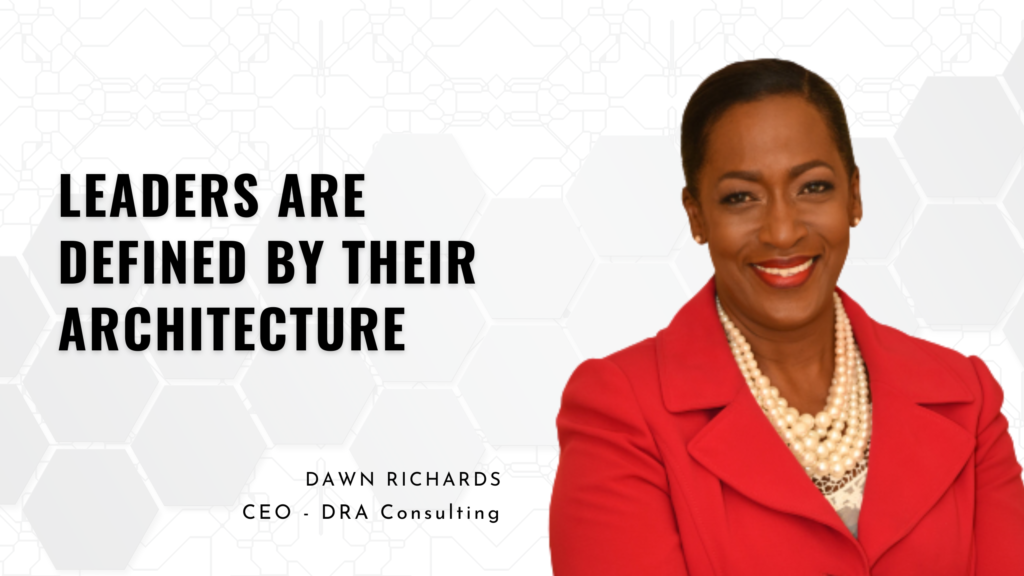
Every leader is defined by his or her leadership architecture.
The pathway from the zone of efficiency, which is task-centered, to the zone of wisdom, which is humanity-centered, is arduous. It requires the death of ego and self-centeredness, which is a challenge for anyone who is overly impressed with himself or herself. Efficiency focuses on completing tasks to time and standards, while wisdom focuses on helping others to discover their zones of genius. The latter process requires turning the lens away from self and onto others.
Let me caution here, that the journey becomes far more challenging, if an individual’s foundational identity is not rooted in championing the lives and development of others.
When building leadership architecture, the alchemy of one’s life experiences converges at the start of the journey. This pursuit, therefore, should begin with the question, “Who am I without my title of leader?” Even if the answer is imperfect, the demands of credibility will force identity revelations and behavioral confrontations. This imagery will distinguish those embarking on leadership for the first time, from those already in the role and in the process of pivoting to a higher level of leadership excellence. Whether a leader is embarking on a new build, or a pivot, he or she should not be daunted by the discoveries. It’s simply part of the process of leadership evolution.
Long after titles fade and roles disappear, it is the architecture of the most admired leaders that will leave the most inspirational and indelible imprints.
Every leader is defined by his or her leadership architecture. The sum of values, principles, zones of genius and actions determine the quality of influence each leader wields. Long after titles fade and roles disappear, it is the architecture of the most admired leaders that will leave the most inspirational and indelible imprints.